
Homeowners in Northeast Ohio evaluating modern, high-efficiency home comfort solutions often turn to fluid-based climate control. Navigating the various types of hydronic heating avoids the distribution losses associated with leaky or poorly insulated ductwork. Hydronic heating systems rely on water to transport thermal energy throughout a home, delivering consistent, whisper-quiet warmth where you need it most.
Whether you are building a new home, completing a major remodel, or retrofitting an existing property in Portage, Mahoning, Summit, or Stark Counties, understanding how water transfers energy efficiently is key to making an informed choice. This guide breaks down the primary types of hydronic heating, answers what a radiant heater is, and evaluates system efficiency and installation options for modern homes.
What Is Radiant Heater and How Does Hydronic Heating Work?
To evaluate hydronic systems, you must first understand what is radiant heater, including the fundamental physical principles of thermal radiation and forced convection. Standard furnace systems heat air, blow it through duct networks into a room, and rely on constant circulation to keep occupants warm. In contrast, hydronic systems use a central heat source—such as a high-efficiency boiler or dedicated tankless water heater—to warm water, which is then circulated through closed-loop piping to specialized thermal emitters.
A radiant heater is any emitter designed to transfer heat energy directly from a hot surface to solid objects and people in a space via infrared electromagnetic energy. Unlike convective air movement, radiant heat does not depend on blowing air currents to transfer thermal energy. When thermal radiation strikes an object—such as furniture, walls, or human skin—that object absorbs the energy and gently increases in temperature.
Hydronic systems excel because water has a high specific heat capacity. Water absorbs and retains thermal energy far more effectively than air, transferring BTU loads through slender, insulated PEX tubing with minimal thermal loss.
4 Primary Types of Hydronic Heating Systems
Hydronic architecture allows for versatile installation configurations depending on your home’s layout, budget, and structural constraints. The four primary types of hydronic heating configurations include:
1. Radiant Floor Heating Systems
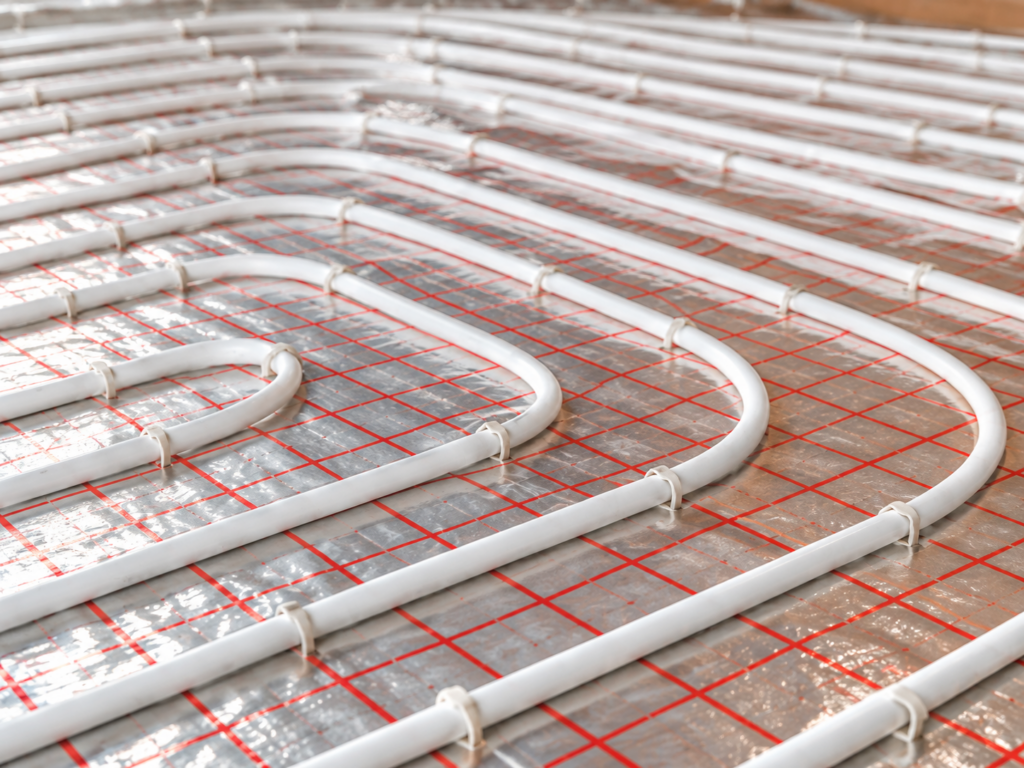
In-floor hydronic systems circulate warm water through cross-linked polyethylene (PEX) tubing embedded directly beneath or within the floor structure. These systems convert the entire floor surface into a low-temperature radiator.
2. Baseboard Radiators (Convectors)
Hydronic baseboards are installed along exterior walls where heat loss is highest. Warm water flows through a central copper pipe wrapped in aluminum fins inside a metal shroud. As cool air enters the bottom of the baseboard, it warms against the aluminum fins, rises naturally into the living space via convection, and creates a continuous heating loop without noisy blowers.
3. Cast Iron and Panel Radiators
Wall-mounted flat panels or classic freestanding cast iron radiators offer localized radiant and convective heating. Cast iron units feature dense thermal mass, holding heat long after the boiler turns off. Modern flat-panel radiators require far less water volume, heat up rapidly, and present a slim design suitable for tight interior layouts.
4. Hydronic Fan Coils and Towel Warmers
For spaces requiring rapid temperature recovery or specialized functionality, hydronic fan coils combine water-fed heat exchangers with low-wattage circulation fans. Hydronic towel warmers extend this technology to bathrooms, integrating comfortably into the primary heating loop while providing localized comfort.
Is Radiant Floor Heat Efficient for Modern Homes?
When property owners evaluate thermal retrofits or new installations, fuel efficiency and long-term operating costs remain primary considerations. Is radiant floor heat efficient compared to traditional forced-air options or electric cable systems? The short answer is yes—hydronic radiant floor heating is one of the most energy-efficient heating methods available today.
Heating Feature
Primary Energy Source
Best Application Scope
Duct Heat Losses
Operating Water Temp
Operating Cost Profile
Hydronic Radiant Floor Heat
Gas/Propane Boiler or Water Heater
Whole-Home & Custom Zones
0% (Closed-Loop Tubing)
Low (90°F – 120°F)
Very Low (High Fuel Efficiency)
Standard Forced-Air Furnace
Gas Furnace / Heat Pump
Whole-Home via Ducts
20% – 30% (Leaky Ducts)
High Air Temp Output
Moderate to High
Electric Radiant Cables
Direct Electricity
Small Spot-Heating (Tiny Bathrooms)
0% (Direct Cable)
N/A (Direct Electric Heat)
High (Electric Utility Rates)
Key Reasons Hydronic Radiant Systems Excel in Efficiency
- Elimination of Duct Heat Losses: Typical duct systems lose 20% to 30% of their thermal energy through leaks, unsealed joints, and poor insulation in unconditioned spaces like attics and crawlspaces. Hydronic systems transfer water through continuous, insulated PEX lines, avoiding forced-air duct losses.
- Lower Operating Water Temperatures: Traditional baseboard radiators require water heated to roughly 180°F. Because a radiant floor covers a massive surface area, it can effectively heat a room using water temperatures as low as 90°F to 120°F. This lower operating threshold allows high-efficiency boilers and tankless water heaters to operate at peak thermal efficiency.
- Reduced Thermal Stratification: Warm air naturally rises. Forced-air furnaces blast hot air into a room, where it accumulates near the ceiling while cooler air sits near the floor. Radiant floor systems deliver heat at ground level, keeping heat where occupants are located and reducing energy wasted warming ceiling space.
- Zoned Comfort Control: Distribution manifolds allow for independent heating zones. Unused rooms can be kept cooler while occupied areas maintain target temperatures, cutting overall energy consumption.
- Versatile Flooring Compatibility: Hydronic radiant heat works efficiently across a wide range of floor coverings. While tile and natural stone offer the highest thermal conductivity, systems are also optimized for engineered wood, hardwood, luxury vinyl tile (LVT), laminate, and low-profile carpet with dense padding.
Key Benefits of Hydronic Heating Over Forced Air
Investing in a hydronic heating system delivers long-term operational advantages beyond monthly fuel savings:
- Cleaner Indoor Air Quality: Forced-air systems push dust, pollen, pet dander, and other airborne contaminants through duct networks. Hydronic radiant heating uses zero forced air, keeping the atmosphere clean and drastically improving comfort for residents with allergies.
- Whisper-Quiet Operation: Hydronic systems run quietly. High-efficiency circulating pumps and modern boilers operate without the loud air turbulence, expanding ductwork pops, and blower noises common to furnaces.
- Constant, Uniform Comfort: Because radiant systems warm the structural floor mass, heat remains steady. Floors stay warm underfoot, reducing cold spots, drafty corners, and sudden temperature dips.
- Uncluttered Floor Plans: In-floor hydronic systems are completely hidden beneath floor coverings, freeing up wall space where registers or radiators would otherwise sit and giving you total freedom in room design.
Professional Installation and Essential System Maintenance
A typical residential floor heating system installation takes between 1 to 3 days to lay the tubing loops, mount distribution manifolds, complete boiler tie-ins, and finish pressure testing. Because proper heat-loss calculations and sizing are critical, working with licensed professionals ensures long-term system reliability.
To keep a hydronic heating system running efficiently, periodic professional maintenance should include:
Annual Boiler Inspection➔ System Pressure Check ➔ Fluid Quality Analysis ➔ Zone Valve & Manifold Inspection
- Annual Boiler & Water Heater Service: Verifying burners, heat exchangers, and ignition assemblies operate safely and efficiently.
- Air Bleeding and Purging: Trapped air bubbles impede water flow, create gurgling sounds, and lower heat transfer rates. Purging air pockets restores proper circulation.
- Fluid Quality & Pressure Checks: Closed-loop systems require proper pressure levels and balanced fluid quality to protect pumps, valves, and heat exchangers from scaling or internal corrosion.
- Manifold & Valve Inspection: Inspecting distribution manifolds, zone valves, and circulator pumps to verify balanced flow across every heating loop.
Upgrade Your Home Comfort with Professional Hydronic Solutions
Hydronic heating provides exceptional energy efficiency, steady warmth, and a healthier indoor environment. Whether you are installing a radiant floor system in a new build, retrofitting an existing subfloor, or servicing an existing boiler setup, expert planning ensures optimal system design and peak performance.
Ready to add radiant floor heating to your home? Contact the State of Ohio-licensed team at Advanced Plumbing Heating & Cooling or visit our Hydronic Floor Heating Installation Page to schedule a professional consultation today.